

For two years, I stretched my hamstrings every single morning. Touch-toes, seated forward fold, standing stretch with one foot on a step. I was consistent in a way I was never consistent with anything else. And after two years, my hamstrings were still tight enough that bending down to pick up a plate from the bottom rack of the dishwasher felt like a small negotiation with my body.
My name is Marcus. I am 38, I lift four days a week, and I have been dealing with tight hamstrings since my late twenties when I transitioned from playing recreational soccer to mostly sitting at a desk. The standard advice, stretch more, stretch longer, stretch every day, never got me more than about ten minutes of relief before everything locked back up.
A friend who does physical therapy work mentioned, almost in passing, that static stretching addresses muscle length but does nothing for the fascial tissue wrapped around the muscle. If the fascia is what is restricting you, stretching the muscle underneath it accomplishes very little. That one sentence changed two years of wasted effort.
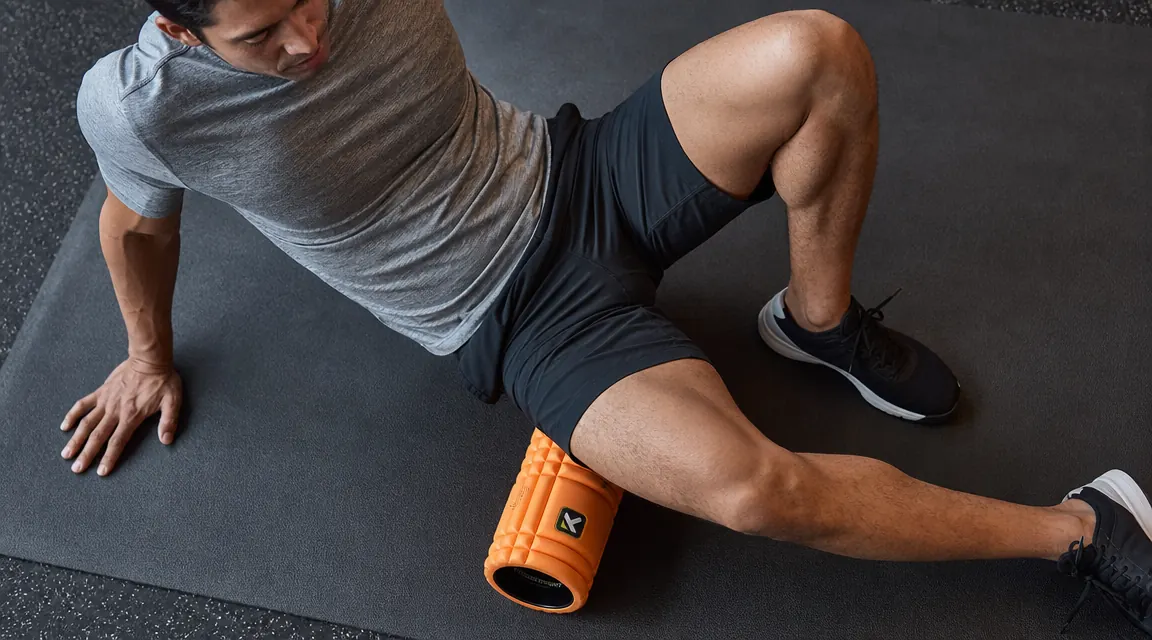
She told me to get a foam roller and spend five minutes on my hamstrings every morning before I stretched. Not instead of stretching. Before it. The foam roller works on the fascial layer first. Then the stretch actually reaches the muscle. I picked up the TriggerPoint GRID foam roller that week, mostly because it was what she used in her clinic and it was on Amazon with nearly 32,000 reviews at 4.7 stars.
Static stretching addresses muscle length. It does nothing for the fascial tissue wrapped around the muscle. If fascia is the problem, stretching the muscle underneath it accomplishes very little.
The first time I used it, I rolled slowly from the back of my knee up to the base of my glute. Two passes on each leg. It hurt in a way that stretching never did, a deep, insistent pressure that made me want to stop. I kept going. When I stood up afterward and did my usual forward fold, my fingertips reached about two inches closer to the floor than they normally do. I laughed out loud, genuinely surprised.

What I learned over the next few weeks is that the GRID's surface is doing something a flat foam roller cannot. The three different zones on the surface, the hollow sections, the firm grid ridges, and the firm flat sections, mimic the varying pressure of a therapist's hand. A flat roller just compresses. The GRID creates shear force, which is what actually breaks up adhesions in the fascial tissue. It is a different mechanism, and the difference is noticeable inside the first session.
Still stretching every day with nothing to show for it?
The TriggerPoint GRID foam roller is what my physical therapist friend uses in her clinic. It has a multi-density surface that targets fascial tissue, not just muscle length. Nearly 32,000 Amazon reviews at 4.7 stars. If tight hamstrings are your problem, this is the missing piece.
Amazon Check Today's Price on Amazon →By the end of week two, I was consistently getting flat palms on the floor in a forward fold. Something I had never done as an adult. I am not someone who exaggerates for effect. That was the result, and I was not expecting it to happen that fast.
I want to be honest about the cons, because there are some. The GRID is firmer than a basic foam roller, and if you are new to self-myofascial release, the first few sessions are genuinely uncomfortable. You have to go slow, breathe through the pressure, and resist the instinct to rush. If you roll fast, you get almost nothing. The roller rewards patience.

It is also not cheap at the current price compared to a basic foam cylinder. Whether that is worth it depends on how frustrated you are. For me, two years of daily stretching that produced nothing was the context. Compared to that, a one-time purchase for a tool that actually changed things felt obvious in retrospect.
What I'd Tell You If We Were Sitting at My Kitchen Table
Here is the thing I wish someone had told me at the very beginning: stretching and foam rolling are not the same category of tool. Stretching works on muscle length. Foam rolling, done right with a roller that has actual texture and density variation, works on the connective tissue around the muscle. If your problem is fascial restriction, you can stretch every day for years and never get there. I did exactly that.
Get the foam roller first. Roll slowly, find the spots that make you want to stop, and stay on them for ten to twenty seconds. Then stretch. The order matters. The texture of the roller matters. A smooth cylinder moves you in the right direction, but the GRID's surface creates the kind of targeted pressure that actually releases the tissue rather than just compressing it.
I still stretch every morning. But now I roll first, and the stretching actually does what it is supposed to do. Five minutes with the TriggerPoint GRID before my stretch routine, and my hamstrings stay open for the rest of the day. That is the whole story. No magic, no complicated protocol. Just the right tool used in the right order.
If tight hamstrings have been your problem for years, the roller is probably the missing step
The TriggerPoint GRID foam roller is the one I still use every morning. Multi-density surface, holds up after a year of daily use, and it is the same tool physical therapists keep in their clinics. Check the current price on Amazon and see whether it fits your budget.
Amazon Check Today's Price on Amazon →