
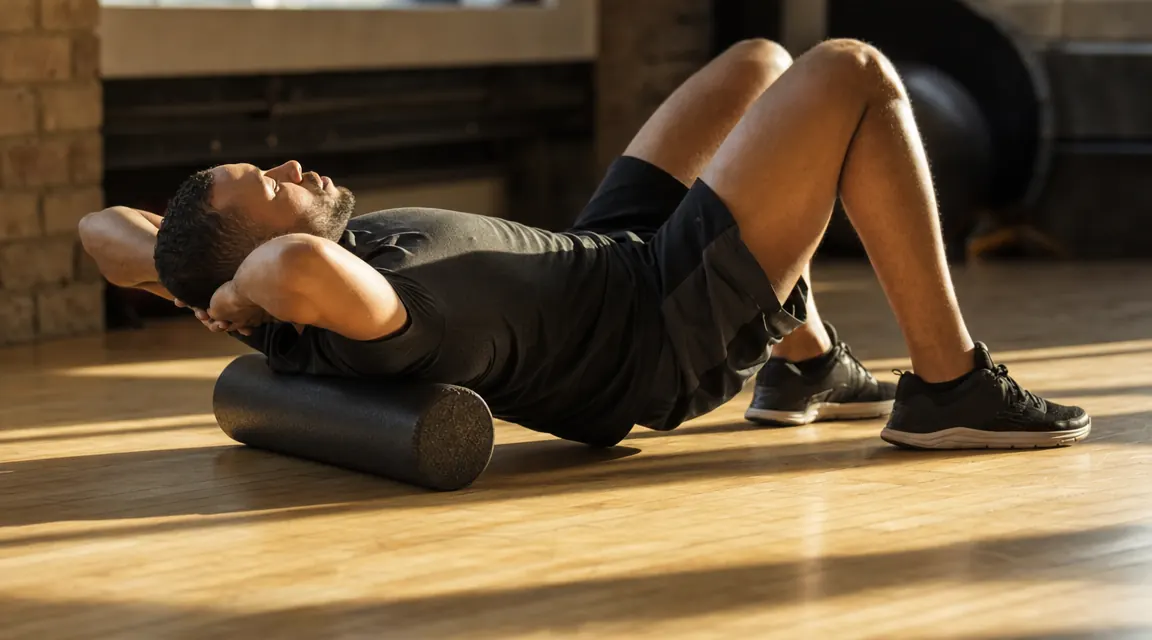
I used to skip foam rolling after workouts. It felt like extra time I didn't have, and honestly, I wasn't sure it was doing much beyond making me wince. Then I started treating it as a non-negotiable post-training step, spent about five minutes learning where to actually roll, and the difference in how I felt the next morning was hard to ignore. The TriggerPoint GRID foam roller has been my go-to for the past year, and what surprised me most wasn't the soreness relief, it was how many separate things it was doing for my body at once.
If you've ever wondered whether foam rolling is worth building into your recovery routine, here are ten things it's actively doing for your muscles when you do it right.
Still using a plain round pool noodle from 2019? The GRID's multi-density surface actually replicates the feel of a therapist's thumb.
The TriggerPoint GRID is rated 4.7 stars across 31,000+ reviews. Check the current price on Amazon before your next training session.
Amazon Check Today's Price on Amazon →It breaks up fascial adhesions that stretching can't reach
Fascia is the connective tissue that wraps every muscle fiber. When you train hard, it can tighten and form adhesions, dense spots where tissue sticks together. Static stretching lengthens the muscle but largely skips past the fascia layer. Foam rolling applies direct compressive pressure that targets those adhesions. Roll slowly (about one inch per second) and pause for 20-30 seconds directly on any dense or tender spot. Don't roll over the pain, sit into it.
It increases local blood flow to damaged muscle tissue
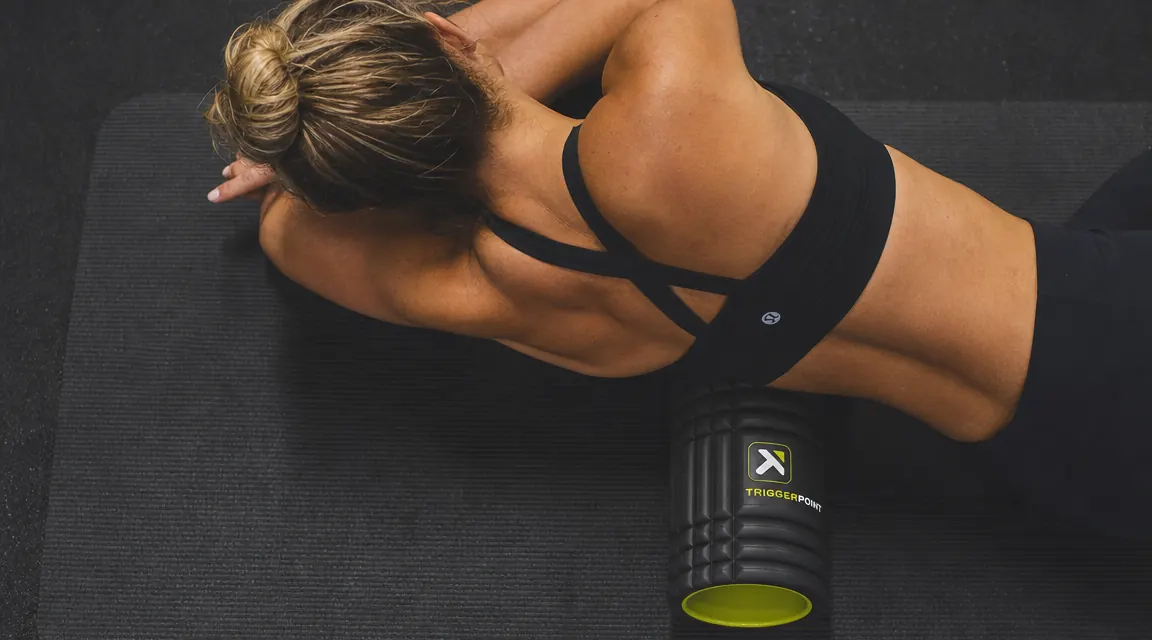
Sore muscles are sore partly because of reduced circulation to the affected area, which slows the delivery of oxygen and nutrients needed for repair. Rolling creates a pressure-release mechanism that flushes blood in and out of the tissue. Think of it like wringing out a sponge. A 2014 study in the Journal of Athletic Training found that foam rolling after exercise significantly reduced DOMS (delayed onset muscle soreness) at 24 and 48 hours. The GRID's multi-density surface amplifies this by varying the pressure pattern across the roll.
It activates the parasympathetic nervous system
Hard training leaves your nervous system in a heightened state. The sustained pressure of foam rolling signals the body to downregulate, similar to how a deep tissue massage shifts you from fight-or-flight into rest-and-digest. This is one reason you feel noticeably calmer after a proper foam rolling session, not just physically looser. Rolling the thoracic spine (upper back) for two to three minutes is particularly effective for this. Do it slowly and breathe through it.
It restores range of motion faster than rest alone
After a hard leg session, your quads and hip flexors tighten up and your squat depth the next day suffers. Foam rolling immediately post-workout has been shown to restore joint range of motion faster than passive rest. The mechanism isn't fully settled in the research, but the leading theory involves Golgi tendon organ stimulation, the sensory organ in your tendons that registers tension and tells the muscle to relax. Two minutes per muscle group is enough to see a measurable change.
It clears metabolic waste from the muscle
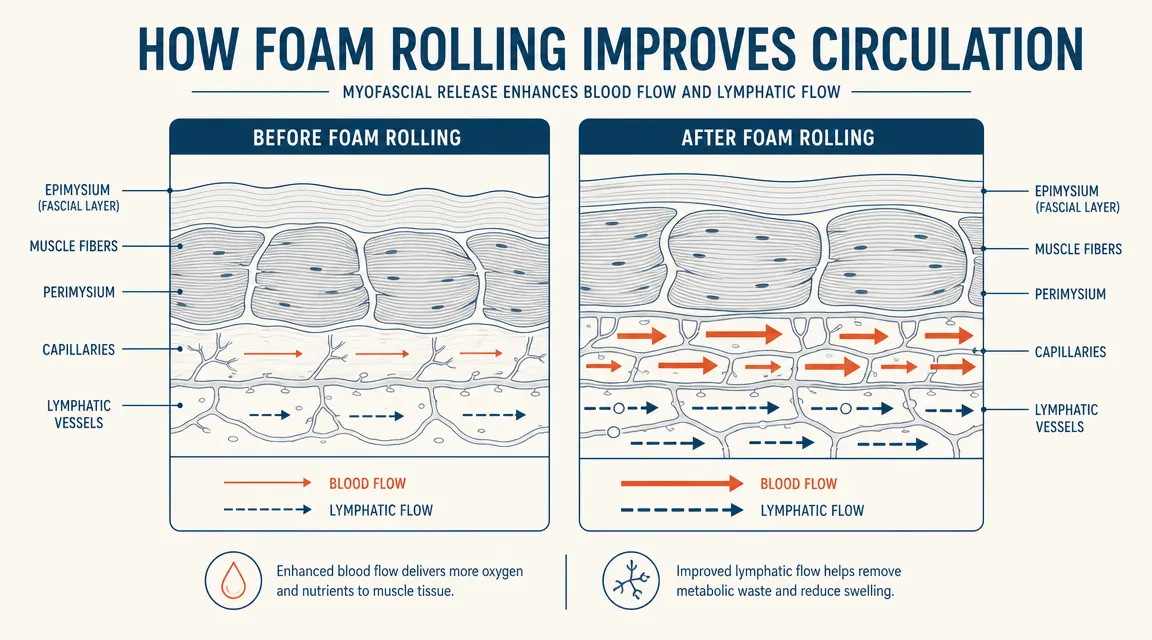
Intense training produces byproducts, primarily lactate and hydrogen ions, that accumulate in muscle tissue. While lactate is actually cleared quickly on its own, other inflammatory markers stay elevated for longer. Foam rolling accelerates lymphatic drainage in the rolled area, helping move these compounds out faster. This is distinct from circulation and it's why rolling a muscle from the distal end (farthest from the body's center) toward the proximal end (closest to the core) is more effective than random direction rolling.
The biggest mistake I see is rolling too fast. Fast rolling is mostly friction. Slow rolling with pauses is the thing that actually unlocks tissue.
It reduces perceived soreness severity, not just duration
This is the part most people feel immediately. Multiple randomized controlled trials have found that foam rolling doesn't just shorten how long DOMS lasts, it reduces how bad it feels at its peak. The TriggerPoint GRID's firmness is important here. Softer foam compresses too much under body weight and loses most of the pressure effectiveness by week two. The GRID maintains consistent firmness for years, which is why it's still meaningfully different from a $12 pool noodle from the drug store.
It re-educates movement patterns after compensations set in
When something is chronically tight, the body compensates around it. Your glutes shut off a little. Your low back picks up the load. Over time, this creates movement dysfunction that compounds. Rolling a tight area, especially the hip flexors, IT band, and thoracic spine, creates a neurological reset that lets inhibited muscles fire properly again. This is why foam rolling belongs in recovery, not just warmup. You're re-establishing the motor patterns that training broke down.

It gives you body awareness that prevents overtraining
This one is underrated. Five minutes of systematic foam rolling after every session trains you to notice where your body is accumulating tension before it becomes an injury. I started noticing my left hip flexor was consistently tighter than my right about three weeks before it would have become a strain. You build a tissue inventory over time. The GRID's varied surface zones, the hollow core, ridges, and flat sections, each provide slightly different feedback that makes this proprioceptive scan more detailed.
It supports better sleep quality on training days
Post-workout cortisol can stay elevated for 90 minutes or more, making it harder to fall asleep if you train in the evening. Foam rolling in the 30 minutes after a workout has the same cortisol-lowering effect as a cool-down walk, and arguably more, because the parasympathetic activation is more direct. Rolling the upper back, glutes, and calves for five to seven minutes post-training is enough to measurably reduce the arousal state that keeps you staring at the ceiling at 11pm.
It compounds over time, making future sessions less damaging
This is the benefit that took me the longest to connect. After three months of consistent post-training rolling, my baseline tissue quality changed. Less daily tightness, faster recovery between sessions, and notably less soreness from the same training loads that used to wreck me for two days. Foam rolling is a maintenance practice, not a one-time fix. The athletes I see getting the most from it are the ones who treat it the way they treat hydration: non-negotiable, every session, regardless of how sore they are.
What I'd Skip
Skip foam rolling directly on a joint (knee, ankle, elbow), on an acutely inflamed area, or on the lumbar spine. The lower back has no bony structure behind it like the thoracic spine does, so rolling it directly can create instability rather than release. Roll the glutes and hip flexors hard instead, those are the structures causing most of the low back tightness in lifters and runners. Also skip the $10 option at the big box store if you train consistently. They go soft within weeks, and once they soften they stop providing enough pressure to do anything useful.
The TriggerPoint GRID has been on the market since 2007 and still dominates the category because the hollow core design hasn't been meaningfully improved on.
If you're training more than three days a week and skipping post-workout rolling, you're leaving recovery time on the table.
The TriggerPoint GRID foam roller is what I recommend to anyone who trains consistently and wants their tissue to stay healthy for years. 4.7 stars, 31,000+ reviews, and it doesn't go soft.
Amazon Check Today's Price on Amazon →