
My left shin started talking to me around mile four of every run. Not a sharp pain, more of a dull burn that started at the tibia and worked its way down into the calf by the time I hit five miles. I had a half marathon on the calendar eight weeks out, a PT who told me to back off mileage, and zero interest in doing that. So I started looking at what I could add to manage the load rather than subtract from the training. That is how I ended up ordering a pair of BLITZU calf compression sleeves at 11 p.m. on a Tuesday in January.
I want to be upfront: compression sleeves are not a cure for shin splints. My PT made that clear. What they can do is modulate blood flow, reduce muscle oscillation during impact, and give inflamed tissue a little support between strides. Whether the BLITZU sleeves delivered on those things over five months of real training mileage is what this review is actually about.
The Quick Verdict
A well-built, affordable calf sleeve that genuinely reduces post-run soreness and provides meaningful support during runs. The sizing runs slightly small and the seam at the ankle can irritate on longer efforts, but for the price point, very few sleeves come close.
Amazon Check Today's Price →Still running on sore calves because you haven't found the right support yet?
The BLITZU calf compression sleeve has over 24,000 Amazon reviews for a reason. At under $15, it costs less than a single PT copay and it ships tomorrow.
Amazon Check Today's Price on Amazon →How I've Used These Over 5 Months
My name is Marcus, I'm 34, and I run about 28-32 miles a week when I'm healthy. I've dealt with medial tibial stress syndrome twice in the last three years, both times diagnosed by imaging and managed with a combination of load reduction, dry needling, and eventual return to full mileage over 6-8 weeks. This past training block I tried to manage the onset symptoms differently rather than just stopping. I wore the BLITZU sleeves on every run from mid-January through late May, a period that covered a 10-miler in February, a half marathon in April, and a loose 5-day-a-week training schedule in between.
I sized into a medium based on BLITZU's calf circumference chart. My calves measure 15.5 inches at the widest point. Medium fit snugly but not uncomfortably on day one. By week three I'd figured out the right placement: pulled up high enough that the top band sat just below the knee crease, with the ankle opening sitting just above the ankle bone. That placement took some trial and error. If you wear it too low it bunches at the heel and if you wear it too high you get a gap that defeats the graduated compression.
I also wore them on off days during the first six weeks when the shin soreness was at its worst, sleeping in them two or three nights when the ache was noticeable. That is not something the packaging recommends, and I am not recommending it here either, but I mention it because the sleeve handled extended wear without digging in or leaving marks.
Compression Level and Fabric: What the Specs Actually Mean in Practice
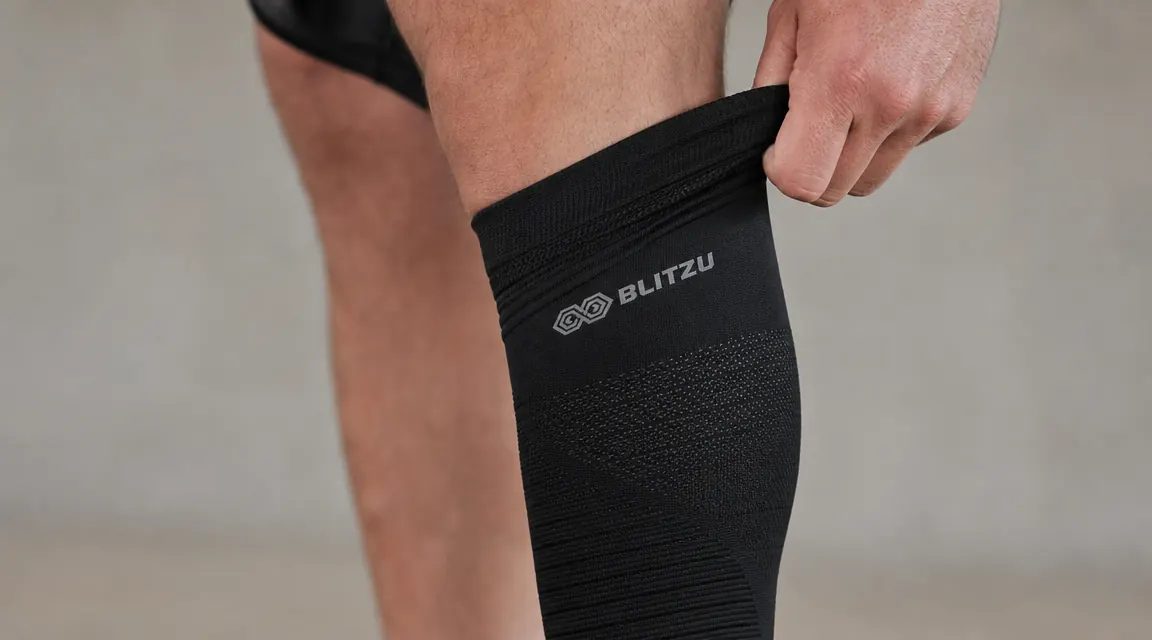
BLITZU rates these at 20-30 mmHg, which puts them in the medical compression range. For reference, flight socks are typically 15-20 mmHg and high-performance running sleeves from brands like CEP or Zensah start around 20 mmHg and go up to 30+ for their recovery models. 20-30 mmHg is not decorative. You will feel it. It is noticeably firmer than the sleeve-shaped ankle socks some runners pass off as compression.
The fabric is a nylon-spandex blend that BLITZU calls ProCirculation fabric. After 5 months and around 40 washes in a mesh laundry bag on cold, the compression has held. That surprised me. A lot of budget compression sleeves lose elasticity around wash 20-25 and start feeling like a slightly stiff tube sock. These have not gone that far. There is maybe a 5% reduction in firmness from day one, which is within normal wear tolerance. The seam construction is the one weakness I keep coming back to: there is a flatlock seam that runs up the back of the calf and a denser seam ring at the ankle opening. On runs under 8 miles I never notice it. On my longest training runs, 13-15 miles, that ankle seam started to chafe slightly on the right sleeve. Not badly, not a blister situation, but a mild irritation I did not have with the left sleeve. That asymmetry is almost certainly a unit variation, not a design flaw, but it is worth mentioning.
The sleeve is footless, which is a meaningful design choice. Footless means you can wear it with any sock, any shoe, and you do not get the humidity trap that full-foot compression socks create inside a shoe during a 90-minute run. If you want to understand the footless-versus-full-sock tradeoff in more detail, the comparison piece on calf sleeves versus compression socks covers the use cases side by side.
Performance Over Time: Weeks 1 Through 20
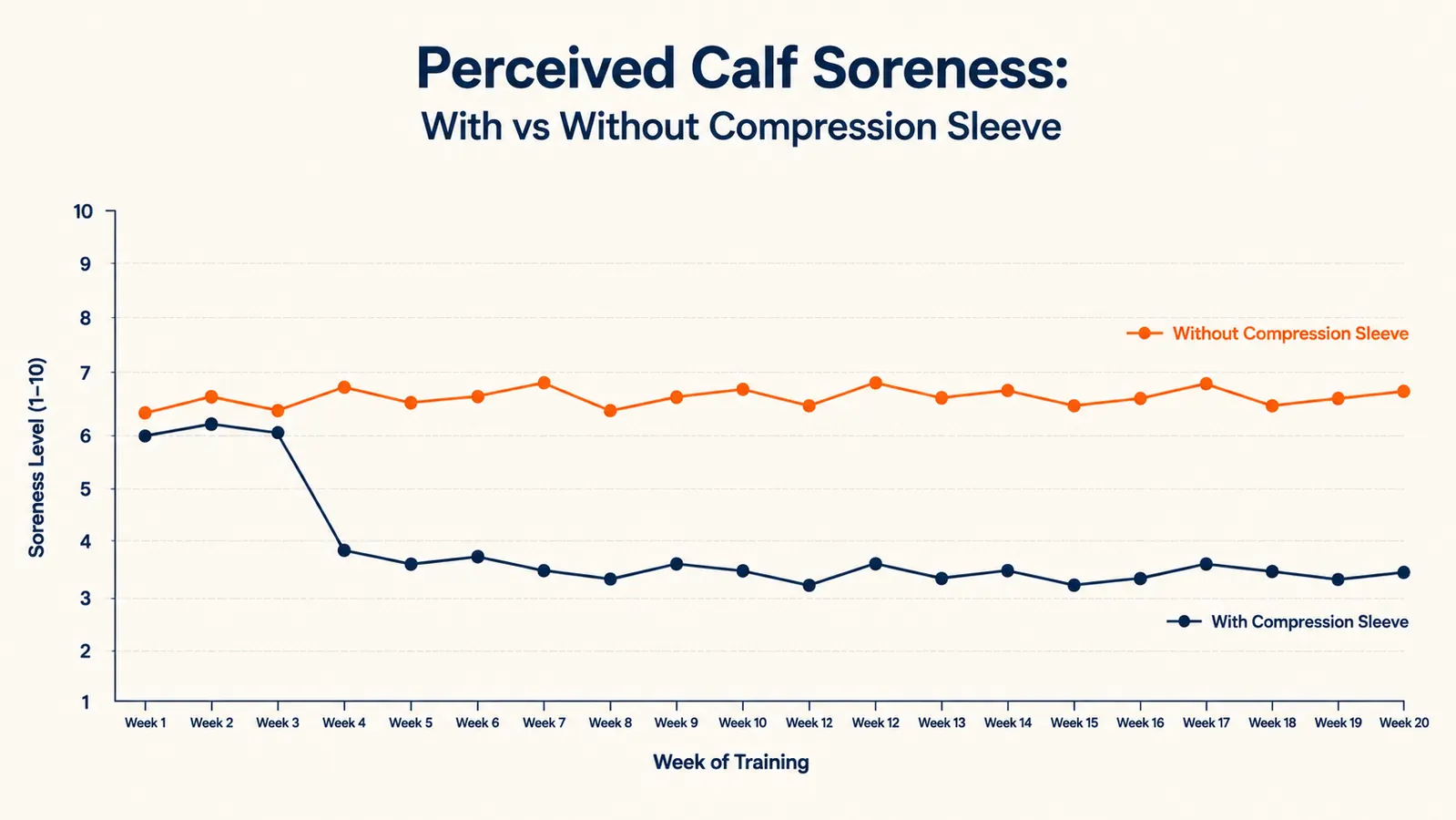
The first two weeks I noticed almost nothing in terms of shin or calf pain management. I was skeptical. My mileage was reduced during this window anyway so it was hard to isolate the sleeve's contribution. Week three was when I started to believe something was working. I had two consecutive 9-mile runs without the usual shin burn at mile four. That could be coincidence. But then I did a side-by-side test: I ran a 7-mile route without the sleeves on Thursday, same route Friday with the sleeves. Friday felt meaningfully better in the lower leg through miles 5-7. Same pace, same terrain, same shoes.
By month two I had a clearer picture of what the sleeves were and were not doing. They were reducing the post-run soreness window. After long runs I used to have 24-36 hours of noticeable calf tightness. With the sleeves on during the run and for 30-45 minutes after, that window compressed to roughly 12-18 hours. That is a real difference in a training block where you are running 5 days a week. The sleeves were not eliminating shin symptoms on bad days. If I went out too fast, ran too soon after a hard session, or stacked two days of hard effort back-to-back, the shin still let me know. Compression supports recovery, it does not override accumulated stress.
After long runs I used to have 24-36 hours of noticeable calf tightness. With the BLITZU sleeves on during the run and for 30-45 minutes after, that window compressed to roughly 12-18 hours. In a 5-day training week, that is a meaningful difference.
Month three through month five was where the durability story played out. The sleeves held compression, held color (still black, no visible fading), and held structure. The silicone grip band at the top of the sleeve has not rolled or folded once in five months, which is actually the failure point I expected first based on budget sleeve reviews I'd read before buying. My only durability note is that the footless opening developed a slight fray at one thread connection point around month four, but it has not grown or spread and I would not call it a defect at this point.
How It Compares to Sleeves I've Tried Before
I've owned three other calf compression sleeves before these. A Zensah sleeve that cost about three times as much, a no-brand pair I grabbed at a pharmacy, and a CEP short sleeve I borrowed from a training partner for a race. The Zensah is excellent, genuinely excellent, and if you are a competitive runner who races frequently and wants the absolute best moisture management and compression consistency, it is worth the premium. But for daily training use and recovery runs, the BLITZU compresses as well as the Zensah and costs a fraction of the price. The pharmacy pair was essentially useless below 10 mmHg and lost what little elasticity it had after about 10 washes. The CEP was comfortable but I found the compression gradient less noticeable than the BLITZU.
The honest comparison here is that BLITZU sits in a tier between the pharmacy throwaway and the premium running-specific sleeve. It performs closer to the premium end than its price suggests. For most recreational runners, that is the right product to buy.
Sizing Accuracy and Fit Notes
BLITZU's size chart is built around calf circumference and is reasonably accurate, but the sleeves run slightly small in my experience. At 15.5 inches I was right in the middle of the medium range and they fit firmly from day one. If you are at the upper end of any size on their chart, I would size up. The sleeve will still be compressive at a larger size and you will avoid the experience of it rolling down mid-run, which happens when a sleeve is marginally too tight and the silicone grip band cannot compensate. Runners with very narrow calves, under 13 inches, may find even the small has too much excess material at the ankle opening.
What I Liked
- Genuine 20-30 mmHg compression that holds after 40+ washes
- Footless design works with any sock and shoe combination
- Silicone grip band has not rolled or shifted once in 5 months
- Noticeably reduces post-run soreness window on long runs
- Under $15 with two pairs per order, and ships with Prime
- Comfortable enough for all-day wear on recovery days
Where It Falls Short
- Runs slightly small, size up if you are at the top of the range
- Ankle seam can cause mild chafing on runs over 12 miles
- Color fades slightly faster than premium sleeves but not dramatically
- Not a substitute for load management with true shin splints
Who This Is For
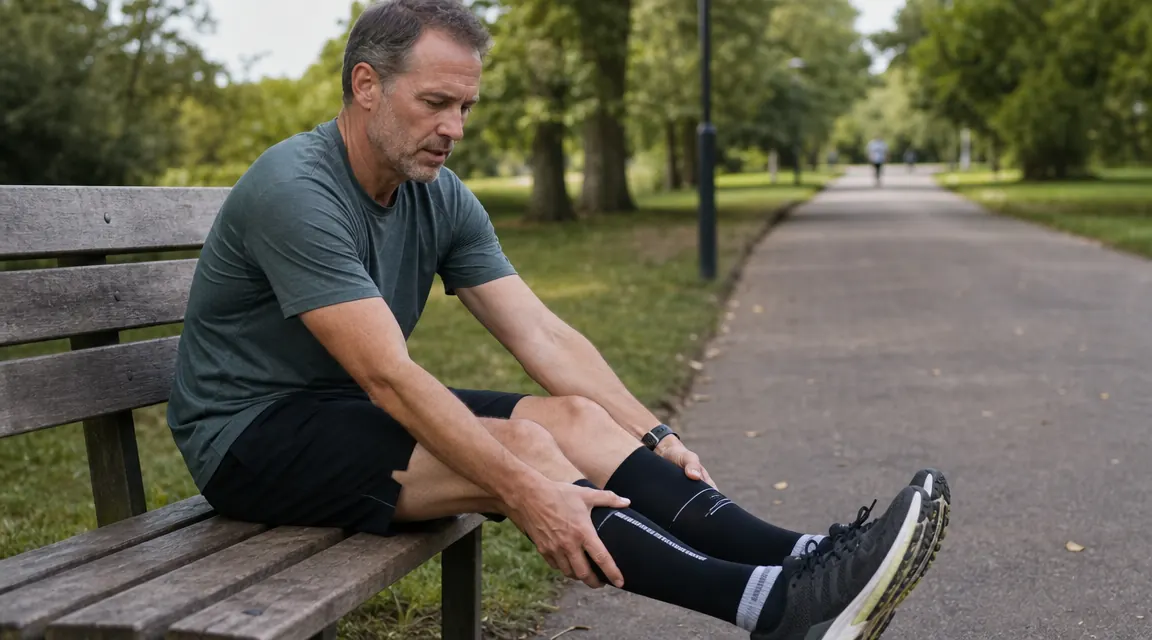
If you are a recreational runner logging 20-40 miles a week, dealing with recurring calf tightness or mild shin symptoms, and you want a daily-use compression sleeve that holds up through a full training block without costing $50, the BLITZU is the right buy. It also works well for people on their feet all day: nurses, teachers, retail workers who want graduated compression without a prescription-grade price. The footless design means you can wear it under pants or with regular shoes without it being obvious.
It is also a solid choice if you are new to compression sleeves and want to test whether compression actually helps your recovery before committing to a higher-end product. If you try the BLITZU and find it makes a meaningful difference, that data point is useful when you are deciding whether to invest in CEP or Zensah. If it does not help, you are out less than the cost of a post-run smoothie.
Who Should Skip It
If you are running ultras or races over 20 miles consistently, the slight ankle seam irritation could compound into a real problem over 4-5 hours of continuous use. I would look at Zensah or CEP for that use case. If you have a diagnosed venous condition or your doctor has prescribed a specific compression level, do not buy over-the-counter sleeves without confirming the mmHg rating is appropriate for your situation. And if your calf pain is acute rather than the dull training-fatigue kind, compression is not the first tool you should reach for. That is a conversation for a PT or a sports medicine doctor, not a product page.
For more on reducing calf soreness with a multi-tool approach that goes beyond just compression, the guide on how to reduce calf soreness after running walks through timing, hydration, foam rolling, and when each tool is most useful in the recovery window.
Two pairs under $15 with same-day shipping: the BLITZU is the most practical compression sleeve upgrade a runner can make today.
Rated 4.5 stars across 24,000+ Amazon reviews. Size up if you are at the top of your calf circumference range, and expect to feel the difference by week three.
Amazon Check Today's Price on Amazon →