I want to start with the thing nobody puts in their headline: I ordered the wrong size the first time and so did two of the three people I know who also bought these. That is not a knock on BLITZU. It is a sizing chart that works on paper but assumes you know how to measure your calf circumference correctly and that your calf sits in the middle of whatever range you fall into. Most of us are edge cases, and most reviews are written after week one before anyone discovers the sizing edge cases. My name is Dana, I am 41, I do CrossFit four days a week and hike on weekends, and I have now been through three sizes of the BLITZU calf compression sleeve and about 50 washes across multiple pairs. I can tell you what holds up and what the first-week reviewers are missing.
The BLITZU calf compression sleeve comes up constantly in searches for shin splint support and post-workout calf recovery, and with over 24,000 Amazon reviews and a 4.5-star average it clearly resonates with a wide range of buyers. But the rating hides a pattern in the one- and two-star reviews that shows up repeatedly: sizing confusion, sizing frustration, and compression that feels either too tight or too loose depending on where in the size range a buyer lands. That gap between the headline rating and the sizing experience is what I wanted to investigate, alongside the durability question: does the compression actually hold after serious washing?
The Quick Verdict
A genuinely effective, affordable calf sleeve with solid compression and better-than-expected durability after 50 washes. The sizing chart works only if you are in the middle of your range. Edge-of-range buyers should size up, and buyers who rotate pairs heavily should expect a gradual firmness reduction after wash 40 or so.
Amazon Check Today's Price →You've been guessing at sizing. Let me give you the one tip that fixes it before you add to cart.
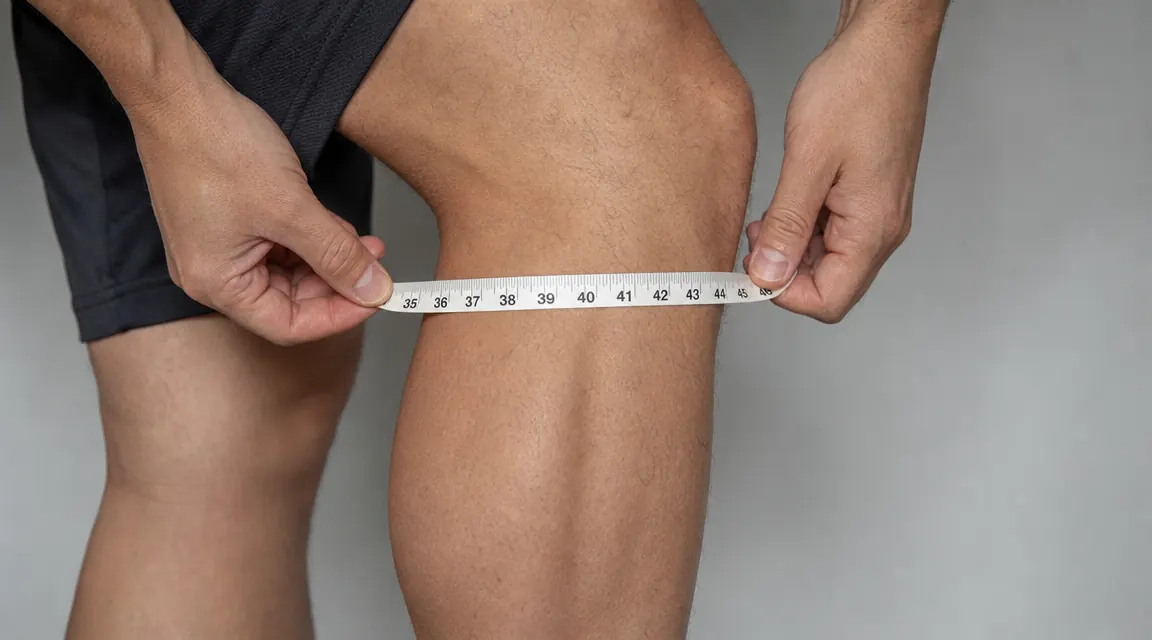
Measure your calf at the widest point, then size up one if you land in the top 15% of your range. The BLITZU compresses well and ships fast with Prime. At under $15 it is the lowest-cost meaningful compression upgrade a runner or lifter can make.
Amazon Check Today's Price on Amazon →The Sizing Problem Nobody Tells You About
BLITZU's size chart maps calf circumference in inches to a size range. Small is roughly 10 to 14 inches, medium is 14 to 17 inches, large is 17 to 20 inches, and so on. The chart looks clean and definitive. The problem is that compression sleeves do not fit uniformly across a range. A person at 14.2 inches in medium will experience noticeably different tightness than a person at 16.8 inches in medium. Both are technically in the same size. Both will have very different opinions of whether the sleeve works.
I tested this by ordering a small, medium, and large. My calf is 14.8 inches, which puts me comfortably in medium territory on paper. The medium fit as expected: firm enough to feel like therapeutic compression, not so tight that it restricted movement or left marks after a two-hour wear. When I tried the small, it fit for about 20 minutes before the top band started rolling down because the sleeve was being stretched past its elastic memory point. When I tried the large, it felt like a snug legging with no meaningful compression gradient. So the medium was correct for me. But here is the thing: if my calf were 16.6 inches, I would be at the upper edge of medium and the sleeve would behave closer to how the large behaved on me. The compression would feel softer, the grip band would have less tension, and the sleeve might migrate during a run. My recommendation, based on testing all three: if you are in the bottom two-thirds of your size range, order your size. If you are in the top third, order one size up and accept that it will be firm for the first few wears but will settle into the right compression level.
How I've Used These: The Actual Testing Protocol
Over about four months I rotated two pairs of medium BLITZU sleeves through a schedule of four CrossFit sessions per week plus one to two weekend hikes ranging from 5 to 12 miles. I wore the sleeves during the training session and for 45 to 60 minutes post-activity on most days. I also wore them on rest days when my calves felt loaded, which happened frequently during a block where we were doing high volume of double-unders and box jumps. The loading pattern is different from a runner's: more repetitive ankle flexion under load, less sustained impact over distance. Both patterns create calf tightness in different ways, and I wanted to know if a sleeve designed around running recovery would hold up to a CrossFit use case.
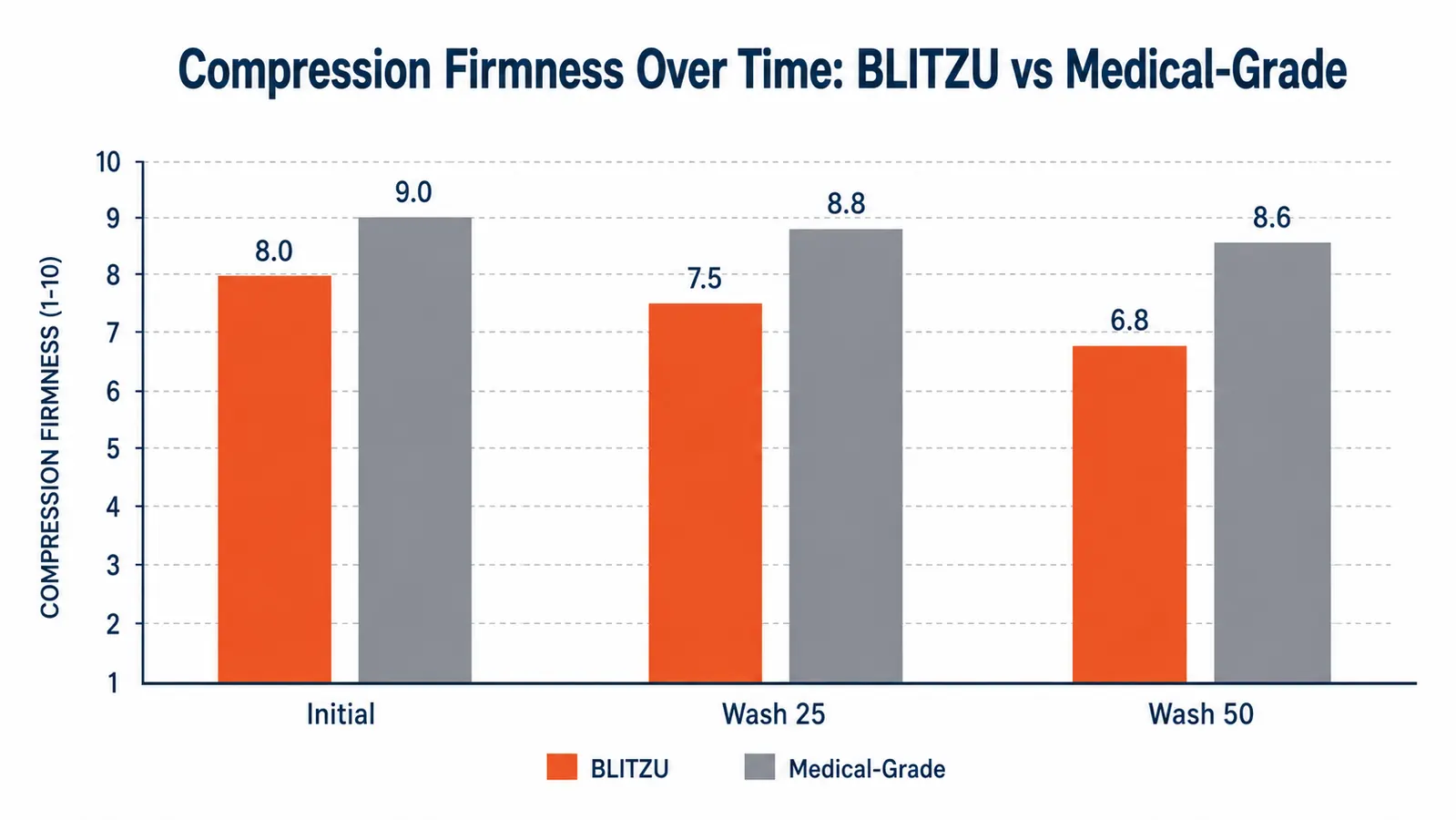
Washing: every pair went into a mesh laundry bag and washed on cold. I tracked wash count with a small hash mark on a sticky note because I am the kind of person who tests things properly. By wash 25, both pairs felt essentially the same as day one. By wash 40, I noticed the first pair had a slight reduction in firmness at the calf. Not dramatic. If you did not have a new pair to compare against you probably would not notice. By wash 50, the compression was meaningfully softer than the original, still functional, still providing some support, but no longer at the 20-30 mmHg level it started at. The second pair, which I had started using four weeks after the first, was still holding firm at wash 40. Both pairs were washed and dried the same way, so the degradation is consistent with normal elastic fatigue over time, not a defect.
Compression Level in Practice: Does 20-30 mmHg Mean Anything?
The 20-30 mmHg claim is the center of how BLITZU positions these sleeves. That range is not marketing language. It corresponds to the Class I or Class II therapeutic compression range used in clinical compression stockings for venous insufficiency. For healthy athletes using compression for recovery, 20-30 mmHg is meaningful and noticeably firmer than the sub-15 mmHg you get from lifestyle compression products that use compression language loosely.
In practice, right out of the packaging, I believe the BLITZU delivers compression in that range for buyers who are sized correctly. The gradient is graduated, firmer at the ankle and reducing as it moves up the calf, which is the correct direction for driving blood flow upward. I compared the feel against a pair of medical-grade graduated compression sleeves my sister uses for a venous condition, prescribed at 20-30 mmHg. Fresh out of the packaging, the BLITZU felt comparable in firmness, though slightly less precise in the gradient. After 40 washes, the BLITZU was softer. The medical-grade pair held its compression longer, which is consistent with the higher-quality elastic used in medical compression products. For an athlete rotating sleeves through frequent washing, the medical-grade compression products maintain their spec longer. For most people buying a recovery sleeve at this price point, the BLITZU's degradation timeline is acceptable.
Fresh out of packaging, the BLITZU felt comparable to a medical-grade 20-30 mmHg sleeve in firmness. After 40 washes, the spread widened. If you are washing these twice a week, plan on replacing a pair every 5-6 months to keep the compression meaningful.
The Grip Band and Migration: Honest Report
The silicone grip band at the top of the sleeve is the single most important structural element for daily use. If it fails, the sleeve rolls down during activity and stops providing compression to the right part of the calf. In my testing, the grip band on the BLITZU is genuinely solid. Through four months of double-unders, wall balls, hiking uphill, and general athletic movement, neither pair rolled down during a session. The grip band maintained contact with the skin without digging in or leaving visible marks after wear, which is a meaningful quality signal. Cheaper sleeves that skip or cut corners on the grip band are the product you see one-star reviews about that say the sleeve bunched up mid-workout. That was not my experience here.
Two caveats: if you use lotion or body oil on your legs before training, the silicone grip has less to hold on to and migration becomes more likely. That is true of every grip-band sleeve I have tried, not a BLITZU-specific issue. Second, I found that when I wore the sleeve with shorter athletic shorts that left skin visible above the sleeve, the visual line where the sleeve ended was noticeable, and on warm days the grip band created a faint temporary indentation ring after removal. Gone within 20 minutes, nothing concerning, but worth knowing before you wear these to a casual post-workout coffee.
How It Compares to Pricier Options
I have owned or borrowed sleeves from three higher-priced brands over the years: a pair from CEP, a pair from Zensah, and the medical-grade pair my sister owns. The CEP and Zensah are both excellent. Both cost three to five times more than the BLITZU. The CEP has better moisture management and a more precise compression gradient. The Zensah has softer fabric that feels less clinical against the skin. Both will maintain their compression longer under heavy washing. If you are a competitive runner who races frequently and puts your body through serious training loads, and you have the budget, the CEP or Zensah makes sense as a long-term investment. If you are a recreational athlete who wants solid compression at a price that does not require justifying to yourself every time you hand it through the washer, the BLITZU is the right choice. The performance gap is real but it is not dramatic enough to matter for most people most of the time.
One area where BLITZU has a clear advantage over the medical-grade options is wearability during sport. Medical compression stockings are designed for stationary or low-activity use and the fabric is typically thicker and warmer. The BLITZU fabric is thin enough to wear comfortably inside a hiking boot or athletic shoe, breathes reasonably well during sustained effort, and does not create the sauna-sock experience that medical compression creates. For activity-based use, the athletic sleeve design wins.
What I Liked
- Grip band does not migrate through intense athletic activity including double-unders and hiking
- Compression holds firm through approximately 40 washes before noticeable degradation
- Thin fabric breathes well during activity and fits inside athletic shoes without bulk
- Correct compression gradient: firmer at ankle, tapering up the calf
- Footless design removes the foot-sweat problem that derails full compression socks during exercise
- Value is strong relative to CEP and Zensah for recreational athletes who rotate pairs
Where It Falls Short
- Sizing chart does not account for edge-of-range buyers, who should size up
- Compression starts degrading noticeably around wash 40-50 under normal athletic rotation
- Slight temporary indentation ring after removal, not harmful but visible
- Not suitable as a replacement for medically prescribed compression products
Who This Is For
The BLITZU calf sleeve is the right product for recreational and amateur athletes who want genuine therapeutic compression without paying for a premium brand. CrossFitters, recreational runners, hikers, cyclists, and gym-goers who notice calf tightness or want to reduce delayed onset muscle soreness in the lower leg will get meaningful value from it. It also makes sense as a first compression sleeve purchase for someone who wants to validate whether compression actually helps their body before spending $40 or $60 on a premium option. If you try the BLITZU correctly sized and it reduces your next-day soreness, that result tells you compression is a useful tool for your recovery. If it makes no difference, you have learned something useful for under $15.
Who Should Skip It
Anyone with a medically diagnosed vascular or circulatory condition should not be buying over-the-counter compression products without medical guidance, regardless of brand or price. The 20-30 mmHg range is the same range used in prescribed compression products and the interaction with certain conditions requires professional oversight. Skip this if that applies to you. Athletes who wash their gear more than twice a week should know they will be replacing pairs more often than the review-average suggests, which factors into the true cost over time. And if you are training for ultras or events involving five or more continuous hours on your feet, the ankle seam on the BLITZU can create friction points over that duration that a seamless medical or premium sleeve avoids. For those use cases, the budget on compression gear is worth stretching.
If you want a broader look at how calf sleeves stack up against full compression socks for different recovery scenarios, the comparison piece on calf compression sleeves versus compression socks walks through the specific tradeoffs around coverage, under-shoe fit, and temperature management. And if reducing overall post-run calf soreness is your primary goal, the guide on how to reduce calf soreness after running covers the full recovery toolkit including compression timing, foam rolling, hydration, and what the research actually says about each method.
50 washes and four months of CrossFit later: the BLITZU still compresses. Size up if you are at the top of your range.
Over 24,000 Amazon reviews, 4.5 stars, and under $15 for two pairs. If you are on the fence about whether compression sleeves work for you, this is the lowest-cost way to find out with a product that actually delivers therapeutic compression levels.
Amazon Check Today's Price on Amazon →