

I started taking Naturebell Magnesium Glycinate 500mg on a Monday in February, the same week I hit three consecutive heavy lower-body sessions and woke up at 2:47am each night like clockwork. I am 38, I train five days a week, and I had chalked those 3am wakeups up to stress. My coach suggested magnesium first. I was skeptical. I bought the Naturebell bottle because the price was reasonable, the capsule count was good, and the chelated glycinate form is the one with actual absorption research behind it. I took two capsules every night before bed for 90 consecutive days and logged my sleep and soreness every morning. Here is what actually happened.
Spoiler: this is not a magic-fix story. But something meaningful did shift around week three, and by week eight I had rebuilt my trust in the night as a recovery tool rather than an interruption. If you are an active adult who trains hard and sleeps badly, the rest of this review is written specifically for you.
The Quick Verdict
Solid chelated magnesium at a price that does not require a second thought. Real sleep improvement starts around week two to three, not day one. Best for active adults with disrupted sleep or training-related muscle tension.
Amazon Check Today's Price →Still waking up at 3am after every hard training week? This is the supplement worth trying first.
Naturebell Magnesium Glycinate 500mg, 240 capsules. Chelated form for absorption. At the current price it works out to pennies per night.
Amazon Check Today's Price on Amazon →How I Used It Over 90 Days
Protocol was simple: two capsules (1,000mg magnesium glycinate, delivering approximately 140mg elemental magnesium) taken with a small glass of water 30 to 45 minutes before bed. I did not change anything else about my training, nutrition, or sleep environment during the test period. I track morning readiness on a 1-10 scale, soreness site by site, and time of first wakeup. I have been doing this for two years, so I had a clear baseline to compare against.
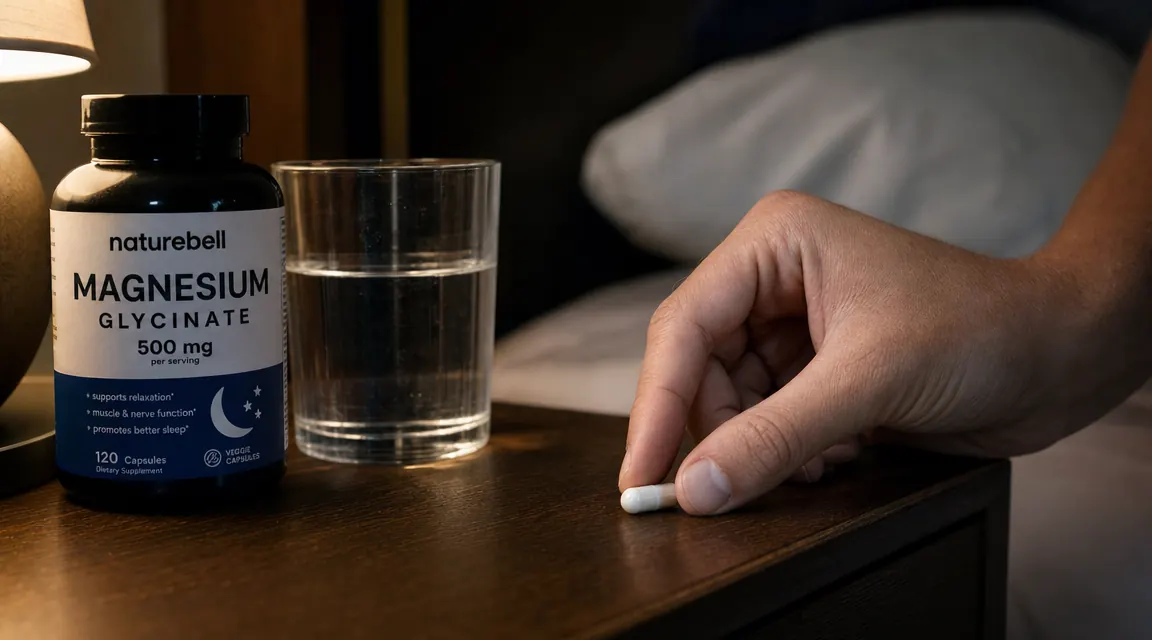
The 240-capsule bottle is a four-month supply at two capsules nightly, so I finished about 90 days worth before writing this. I kept the bottle on my nightstand next to a glass of water, which made the habit frictionless. I missed four nights across the whole period, all travel-related, and I noted slightly worse sleep on three of those four nights. That is not proof of anything, but it is worth noting.
I also want to be clear about what I was not tracking: I did not have bloodwork done before or after, so I cannot tell you my serum magnesium levels changed. The improvements I am reporting are subjective but systematic. I scored each metric every morning before looking at anything else, which keeps the ratings honest.
What Actually Changed: Sleep Quality Week by Week
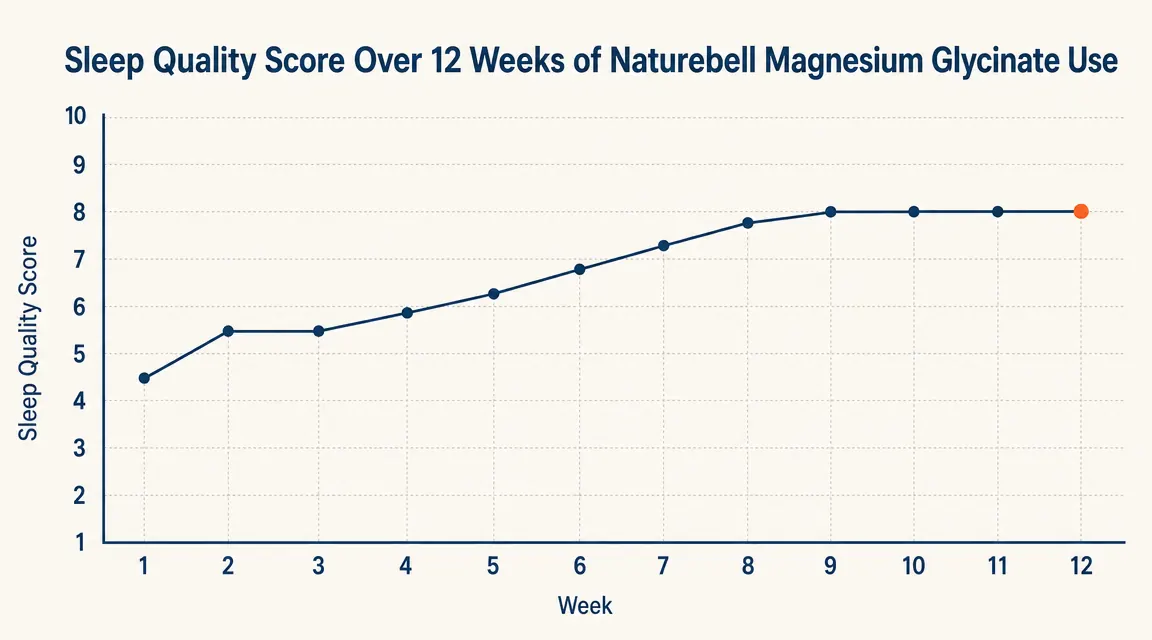
Week one was a wash. I fell asleep at roughly the same time, woke up at roughly the same hour, and felt about the same in the morning. If I had stopped here, I would have called it a placebo with a good marketing budget. I see a lot of reviews that are written after a week and I think they miss the story entirely with magnesium. The mineral works through a different mechanism than melatonin or sleep aids. It does not sedate you. It restores a physiological condition that lets your nervous system do what it already knows how to do.
By the end of week two I noticed I was sleeping through most nights without the 3am split. Not every night, but four out of seven instead of zero out of seven. That felt significant. My morning readiness scores moved from an average of 5.1 to 6.3 over that two-week window.
Week six is when I would have pointed anyone to as the inflection point. My average readiness score that week was 7.6. I was waking up once per night at most, usually closer to 5am rather than 3am, which meant I was getting a full deep sleep cycle before that disruption. The leg soreness I normally carry into Thursday from a Tuesday squat session was noticeably lighter. Not gone, but lighter.
By week twelve, the sleep quality chart had leveled off around 7.8 to 8.0, which is about as good as my training load allows. I did not expect a supplement to eliminate the physiological fatigue of five training days. But I stopped dreading the night before a hard session, which I did not realize had been a real mental weight until it lifted.
I stopped dreading the night before a hard session. I did not realize that had been a real mental weight until it lifted around week six.
The Ingredient Deep Dive: Why Glycinate Specifically
Not all magnesium supplements work the same way. The form matters more than most labels will tell you. Magnesium oxide, the cheapest and most common form, is poorly absorbed in the gut, and at higher doses it acts as a laxative more than anything else. Magnesium citrate absorbs better and is fine for general use, but for active adults trying to reduce muscle tension and improve sleep specifically, glycinate is the form backed by the strongest research. If you want a detailed breakdown of why, the comparison article on this site walks through the absorption and onset differences between glycinate and citrate specifically.
Glycinate is magnesium chelated to glycine, an amino acid that has its own calming neurological effects. The combination means the magnesium delivers into the body more completely, and the glycine contributes independently to sleep quality. Naturebell uses a fully chelated form, which they state explicitly on the label. They also use veggie capsules, which matters if you are avoiding gelatin, and the capsule size is manageable without food.
The 500mg per capsule figure on the label refers to magnesium glycinate complex, not elemental magnesium. This trips people up. At two capsules you get roughly 140mg of elemental magnesium, which is a meaningful but moderate dose. Some coaches push higher, but starting in this range is sensible and the 240-capsule bottle allows room to adjust.
Effect on Muscle Soreness and Recovery
Sleep is the biggest recovery lever, so some of what I noticed with soreness is downstream of better sleep rather than a direct magnesium effect. That said, magnesium plays a direct role in muscle contraction and relaxation, and there is credible evidence that deficiency amplifies delayed onset muscle soreness. I train hard enough that this matters.
What I logged: from week four onward, my quad and hamstring soreness after heavy lower-body sessions was consistently one point lower on my subjective scale than it was in the baseline period. From an average of 6.2 down to about 5.1. That may sound small, but at a 5 I can still do an active recovery run the next morning. At a 6 I am shuffling and skipping the run. That is a real-world difference in training consistency.
I also noticed less nighttime muscle cramping. I used to get occasional calf cramps around 4am after long runs. Those dropped off after week five and did not return for the remainder of the test. Magnesium's role in electrolyte balance and muscle relaxation is well documented, and this tracks with what the research says.
Alternatives I Considered and Why I Stayed With This One
Before I settled on Naturebell I looked seriously at Thorne Magnesium Bisglycinate and Pure Encapsulations Magnesium Glycinate. Both are excellent, third-party tested, and clean. Both are also significantly more expensive. At current prices you are paying roughly two to three times as much per capsule for those brands. If I had specific dietary restrictions, a known absorption issue, or was following a clinical protocol, I would pay for the premium. But for a healthy active adult using magnesium glycinate as a daily recovery support, Naturebell holds up.
I also looked at Doctor's Best and NOW Foods Magnesium Glycinate. Both are comparable in price to Naturebell. Doctor's Best uses TRAACS branded chelate, which is a quality indicator. NOW is a reliable basic. Naturebell landed well in the comparison because of the capsule count per bottle and the absence of unnecessary fillers. The ingredient list is clean: magnesium glycinate chelate, vegetable cellulose capsule, and nothing else.
What I Liked
- Fully chelated glycinate form with real absorption research behind it
- 240 capsules per bottle means one purchase covers four months at standard dosing
- Vegetarian capsule, no unnecessary fillers or additives
- Sleep improvements consistent and measurable starting around week two to three
- Reduced nighttime muscle cramping from week five onward
- Priced low enough to use consistently without second-guessing the expense
Where It Falls Short
- Results take two to three weeks to feel, not two to three days
- Label says 500mg per capsule but that is the glycinate complex, not elemental magnesium. Expect about 70mg elemental per capsule
- No third-party certification label (NSF, USP, Informed Sport) on the bottle
- Not meaningful for soreness if your sleep is already excellent and your training load is low
- Capsule is on the larger side for people who have difficulty swallowing standard-sized caps

The One Thing I Would Do Differently
I started at two capsules immediately. If I did this again, I would start with one capsule for the first two weeks. Not because I had side effects at two, but because building the habit at a lower dose would have helped me figure out faster whether the dose was working before I needed to assess whether to go higher. Several coaches recommend starting at 200mg elemental and titrating up to 300-400mg over four to six weeks. One capsule nightly gets you there gradually. The bottle lasts even longer and the cost per trial period drops. Once you confirm it is working, moving to two capsules is simple.
Who This Is For
This supplement makes the most sense for active adults who train four or more days per week, notice their sleep suffers on hard training weeks, and have not already addressed the low-hanging recovery basics. If you are training hard, sleeping seven hours consistently, not over-caffeinating, and still waking at 3am or carrying unusual soreness into your second day, magnesium glycinate is a logical first supplement to test. At current pricing, the cost-per-night is low enough that the bar for trying it is essentially zero. It fits well into any recovery stack alongside a foam roller routine and post-workout protein timing. If you want to understand the timing and dosing side more specifically, the how-to article on magnesium glycinate for muscle recovery goes deeper on that.
Who Should Skip It
If you have kidney disease or take medications that affect magnesium levels (certain antibiotics, diuretics, or proton pump inhibitors), talk to your doctor before adding any magnesium supplement. This is not a disclaimer for its own sake. Magnesium interacts with a real list of medications and chronic conditions. Also skip it if you are looking for an overnight fix. There is no mechanism here for day-one relief. If you need immediate help with soreness or sleep, tools like a quality massage gun or a consistent foam rolling practice will give you faster feedback. For people who want a low-cost, no-stimulant supplement that builds real recovery capacity over four to twelve weeks, this is a strong pick.
Three months in, I would buy this bottle again without thinking twice.
Naturebell Magnesium Glycinate 500mg, 240 veggie capsules. Chelated form, clean label, four months of nightly use per bottle. Check what it is selling for today before deciding.
Amazon Check Today's Price on Amazon →