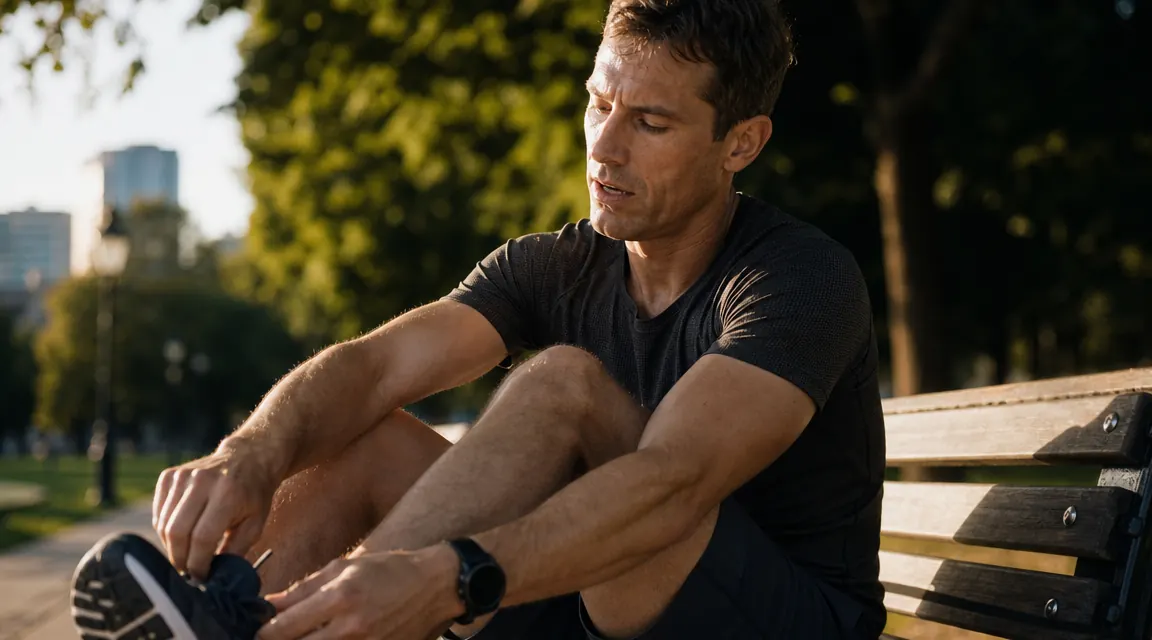
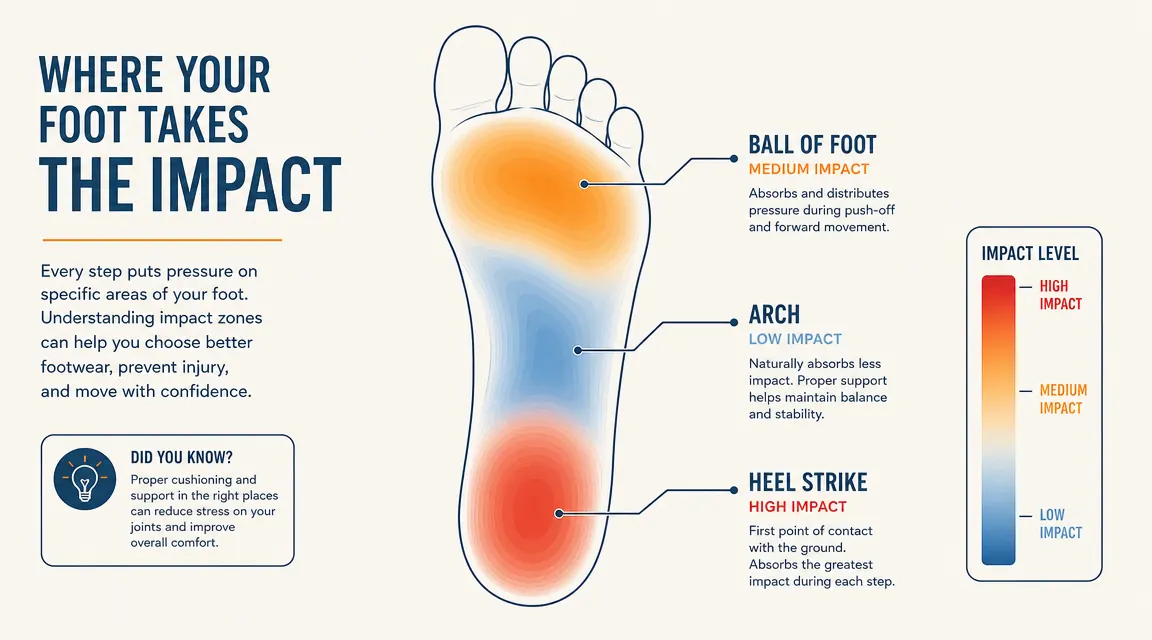
If you have run anything beyond 10 miles, you know the feeling. It is not the quads that give out first , it is the feet. The arch tightens, the ball of the foot throbs, and by the time you get to your car your gait looks more like a shuffle than a stride. That accumulated stress does not just hurt in the moment. Ignore it long enough and it turns into plantar fasciitis, stress fractures, or chronic Achilles tightness that keeps you off the road for weeks.
The good news: foot fatigue is one of the most predictable and preventable parts of runner's recovery. There are five steps that, done in the right order within the right time windows, make a measurable difference in how your feet feel the morning after. The lynchpin of the routine is a pair of OOFOS OOriginal Recovery Sandals you slip into the minute you stop running. Everything else builds around that.
Step 1 starts the moment you stop running. Have your recovery sandals ready.
OOFOS OOriginal Recovery Sandals use OOfoam technology that absorbs 37% more impact than traditional footwear foam. They are the first thing most sports podiatrists recommend for post-run foot care, and they have 25,000+ ratings on Amazon for a reason.
Amazon Check Today's Price on Amazon →Step 1: Swap Into Recovery Footwear Within 10 Minutes of Finishing
This is the step most runners skip because it feels like a luxury. It is not. Your foot has been compressed inside a running shoe for one to four hours. The plantar fascia, the metatarsal joints, and the heel fat pad are all in an inflamed, load-bearing state. Every additional minute in a firm-soled running shoe after you stop is additional compressive stress on already-compromised tissue. The goal of this first step is to decompress.
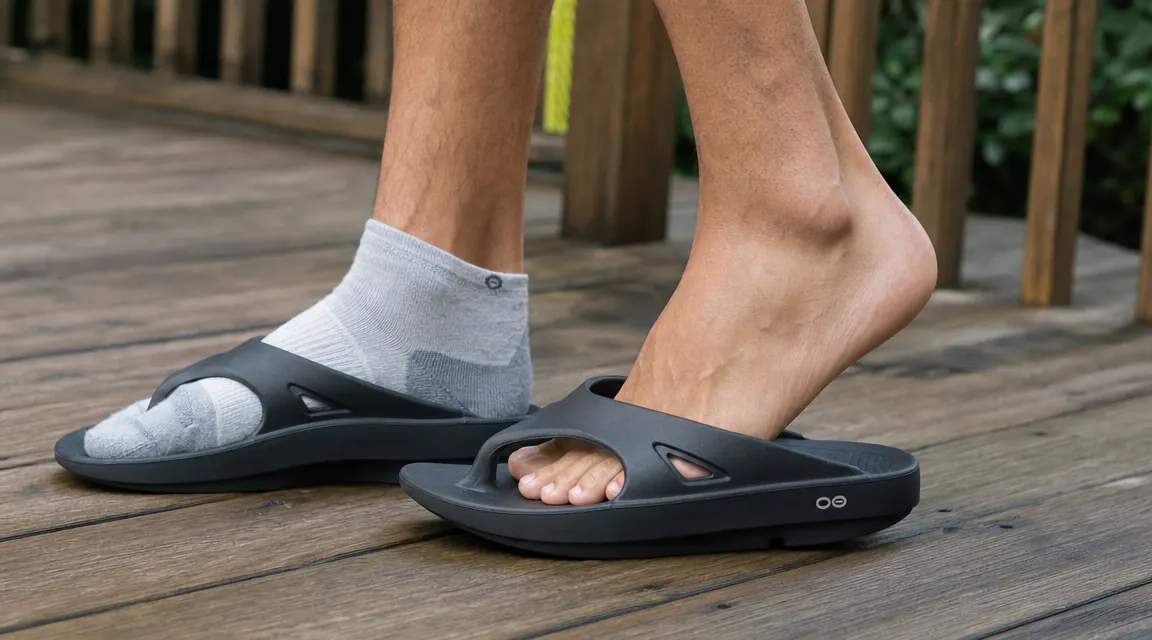
What you want is a sandal with a deeply cushioned, rocker-shaped midsole that reduces the load on the forefoot and arch rather than transferring it. I use OOFOS OOriginal Recovery Sandals for this purpose. The OOfoam midsole is noticeably softer than standard EVA foam, and the built-in arch shape positions your foot in a mild plantarflexion that takes mechanical stress off the fascia. Put them on in the parking lot or the second you walk through your front door. The transition from compressed to cushioned is something you actually feel, not something you have to take on faith.
A few things to know about fit: OOFOS run about a half size large, so if you are a 10 in your running shoe, try a 9.5 or just size down one full size and see how the toe box feels. The sandal is not designed for walking long distances , it is designed for the two to four hours post-run when you are on your feet at home or around the gym. That is its job, and it does it well. The 4.6-star average across 25,000 reviews reflects exactly that use case: people who are serious enough about recovery to treat the hour after their run as part of their training.
Step 2: Elevate and Ice for 15 to 20 Minutes
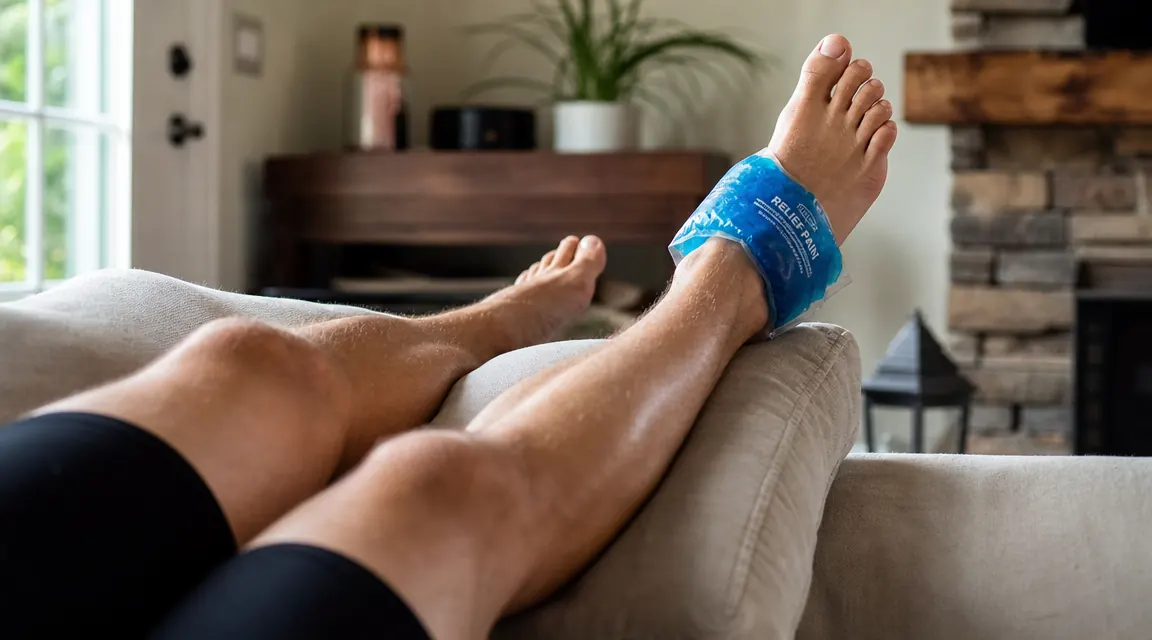
Elevation is free and it works. Lie on your back on a couch or floor and prop your feet on two stacked pillows or a foam roller so your heels sit about 12 inches above your heart. This position uses gravity to drain the pooled blood and inflammatory fluid that builds up in the foot and lower leg during a long run. You will feel the pressure in your arches reduce within the first five minutes. Stay there for at least 15 minutes. If you have a history of plantar fasciitis or your feet swell noticeably after runs, extend this to 25 minutes.
Combine elevation with ice if the ball of your foot or the heel is tender to the touch. A bag of frozen peas wrapped in a thin cloth works. Do not put ice directly on bare skin. The cold reduces local inflammation and blunts the throbbing sensation that makes it hard to relax after a hard effort. Ice for no more than 20 minutes at a time. If the area is numb, you have gone long enough. The goal here is reducing acute inflammation, not treating a chronic injury , those are different problems that need different approaches.
Step 3: Roll the Arch and Ball of Foot for 5 Minutes Per Foot
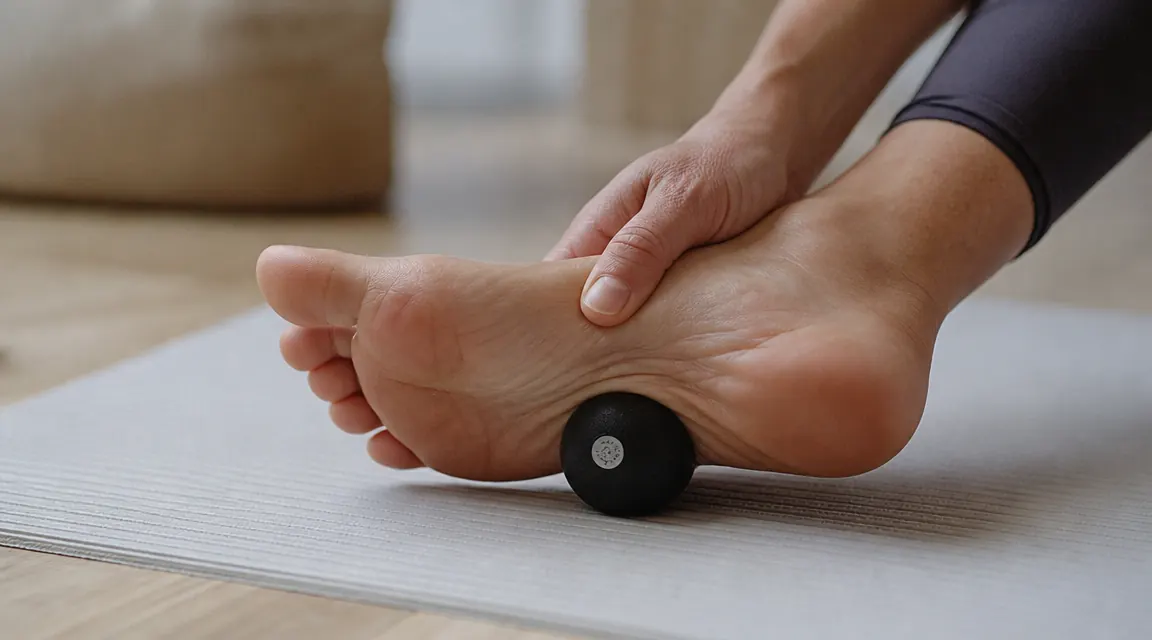
After the elevation window, the foot tissue is less inflamed and more receptive to manual work. A lacrosse ball is the best tool for this. A golf ball works if that is what you have, but the extra firmness can be too much if you have a sensitive arch. Sit in a chair, place the ball under your foot, and apply slow, deliberate pressure along three lines: the inner arch (from heel to big toe joint), the outer arch (heel to pinky toe joint), and the ball of the foot just behind the toe line.
Move at roughly one inch per 10 seconds. You are looking for tight or tender spots, not just rolling for the sake of it. When you find a spot that is noticeably sore, park on it with about 60 to 70 percent of your body weight for 30 to 45 seconds. You should feel the tension release gradually , not snap, not shoot pain up your leg. If it sharpens significantly, ease off. Five minutes per foot done this way is worth more than 20 minutes of absentminded rolling. After both feet, do 10 slow ankle circles in each direction before standing up.
The runners who recover fastest are not doing anything exotic. They are doing five specific things in the right order within the first two hours of finishing. Footwear is first , everything else builds on that foundation.
Step 4: Rehydrate With Electrolytes, Not Just Water
Foot cramping and prolonged arch soreness after long runs are frequently a hydration and electrolyte problem, not just a mechanical one. When you sweat for two-plus hours, you lose sodium, potassium, and magnesium in quantities that plain water cannot replace. Low magnesium in particular is directly linked to muscle cramping and delayed recovery , the plantar fascia and the small intrinsic muscles of the foot are no exception.
In the 30 to 60 minutes after a long run, drink 16 to 24 ounces of fluid with added electrolytes. A packet of electrolyte powder in water, a sports drink with sodium, or coconut water with a pinch of salt are all adequate options. If you take magnesium glycinate as part of your sleep and recovery supplement stack, this is a good night to take your dose slightly earlier than usual , around 7 or 8 pm rather than right before bed , so the magnesium is available during the evening recovery window rather than just while you sleep. This is not a prescription, just a timing tweak that some runners find makes a noticeable difference in how their feet feel the next morning.
Step 5: Sleep With Feet in a Neutral or Slightly Extended Position
Most people sleep with their feet plantarflexed , pointed slightly down, toes tucked under, or with heavy blankets pressing the foot into a dropped position. After a long run, this is problematic. The plantar fascia is already shortened and irritated from miles of repetitive loading. Spending six to eight hours in plantarflexion keeps it shortened. When you then stand up in the morning, that first-step pain is the fascia being forced to stretch cold.
The fix is simple: sleep with lighter blankets on your feet, or with your foot propped against the end of a firm pillow that keeps the toes pointing slightly upward. A night splint is the medical-grade solution for runners with diagnosed plantar fasciitis, but for general post-run fatigue, sleeping without compression and with moderate dorsiflexion is usually enough. Before you get out of bed the next morning, do 15 slow seated calf raises and five ankle alphabet circles on each foot before you stand. That two-minute warmup is the difference between stepping out of bed normally and limping to the bathroom.
What Else Helps
The five steps above handle the acute window , the 12 hours after your run. For runners logging 30 or more miles per week, a few additional habits compound the recovery benefit over time. Calf strength training reduces ground reaction forces transmitted to the foot, meaning each mile is a smaller insult. Single-leg calf raises , slow and loaded, not fast and bodyweight , are the most direct investment you can make. Three sets of 12 to 15 reps on each leg, twice a week, and within six to eight weeks most runners report noticeably less foot fatigue after their long runs.
Running shoe rotation also matters more than most runners realize. A single pair of running shoes needs 24 to 48 hours for the midsole foam to fully rebound after a hard effort. If you run on consecutive days in the same pair, you are running on compressed foam that is not providing its rated cushioning. Two pairs in regular rotation extends the life of both and ensures you are always running on a properly rebounded midsole. If budget is a constraint, rotating between your current training shoe and a cheaper but well-cushioned everyday trainer still provides most of the benefit. Finally, if you have not had a proper gait analysis in the last two years, it is worth 30 minutes at a running specialty store. Overpronation and supination both concentrate stress in specific areas of the foot that no amount of post-run care can fully offset if the root cause is in your mechanics.
For related reading, check the full guide on why recovery sandals matter for foot soreness after the gym, and the long-term review of OOFOS after a year of post-run use, both on this site. They go deeper on the product side of this protocol and on the biomechanics behind why specific recovery footwear outperforms regular flip-flops or bare feet for post-run care.
Your feet did the work. Give them the recovery they need.
OOFOS OOriginal Recovery Sandals are the first and most important piece of this protocol. OOfoam technology, 37% more impact absorption than standard foam, arch support built into the midsole. Available in multiple colors and half sizes. Rated 4.6 stars by more than 25,000 runners and gym-goers.
Amazon Check Today's Price on Amazon →