If you run more than three days a week or spend serious time under a barbell, you already know the feeling: finish a session, get home, and your feet just ache for the rest of the day. Recovery sandals fix that more reliably than most people expect. The debate for most runners right now comes down to two brands: OOFOS and HOKA. Both have real followings in the running community, both are built specifically for post-activity recovery, and both cost real money. So which one is actually worth buying?
Short answer: OOFOS wins for the majority of runners and gym-goers, particularly anyone dealing with plantar fasciitis, tight arches, or chronic foot fatigue after long training blocks. The HOKA ORA Recovery Slide is a legitimate option if you prefer a flatter footbed and do not need aggressive arch support. But for most people, the biomechanical difference in how OOFOS handles impact is hard to argue against. Here is the full breakdown.
| OOFOS | HOKA Recovery Sandals | |
|---|---|---|
| Price | ~$59.95 (Amazon) | ~$59.95 (HOKA direct) |
| Foam Technology | OOfoam , 37% more impact absorption vs EVA | Injected EVA midsole with open-cell cushioning |
| Arch Support | High contoured arch built into footbed | Minimal to moderate arch contouring |
| Heel Drop | Approx. 7mm | Approx. 20mm (higher stack, flatter relative drop) |
| Strap Style | Single thong strap | Double hook-and-loop strap (adjustable width) |
| Sizing Quirks | Runs about 0.5 size large; size down | True to size for most runners |
| Weight (per sandal) | Approx. 7.4 oz (men's 9) | Approx. 8.0 oz (men's 9) |
| Durability | OOfoam holds rebound for 12-18 months of daily use | EVA compresses more quickly under daily use |
| Plantar Fasciitis Suitability | Excellent , arch contour and low heel drop reduce tension | Moderate , higher stack absorbs impact but less arch engagement |
| Amazon Rating | 4.6 stars (25,673 reviews) | Not sold on Amazon |
Where OOFOS Wins
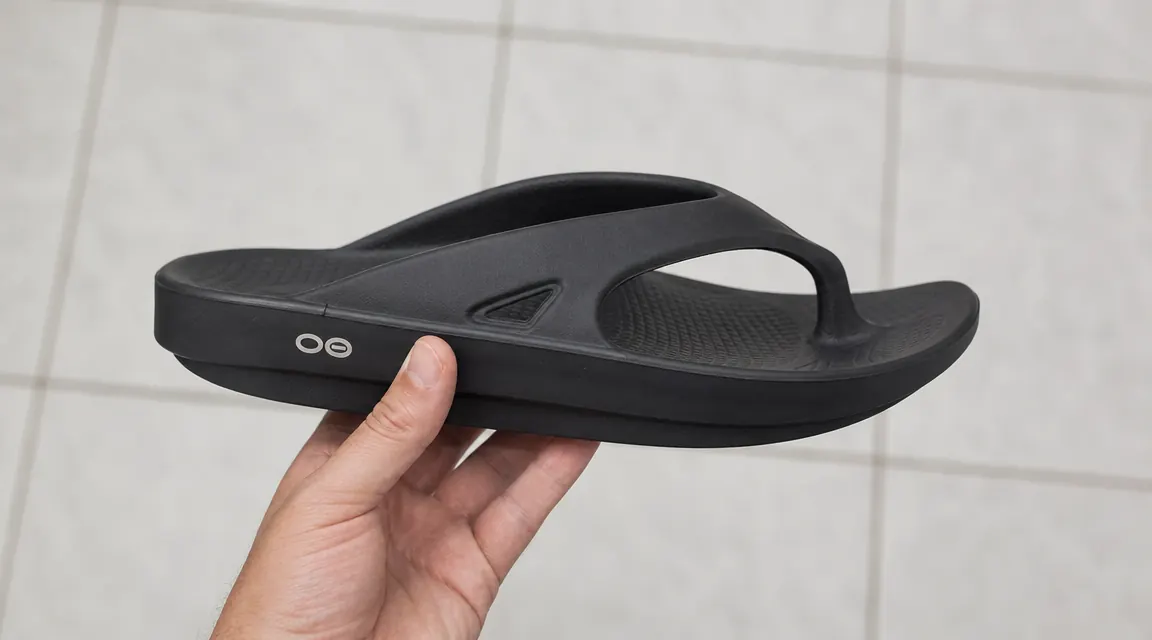
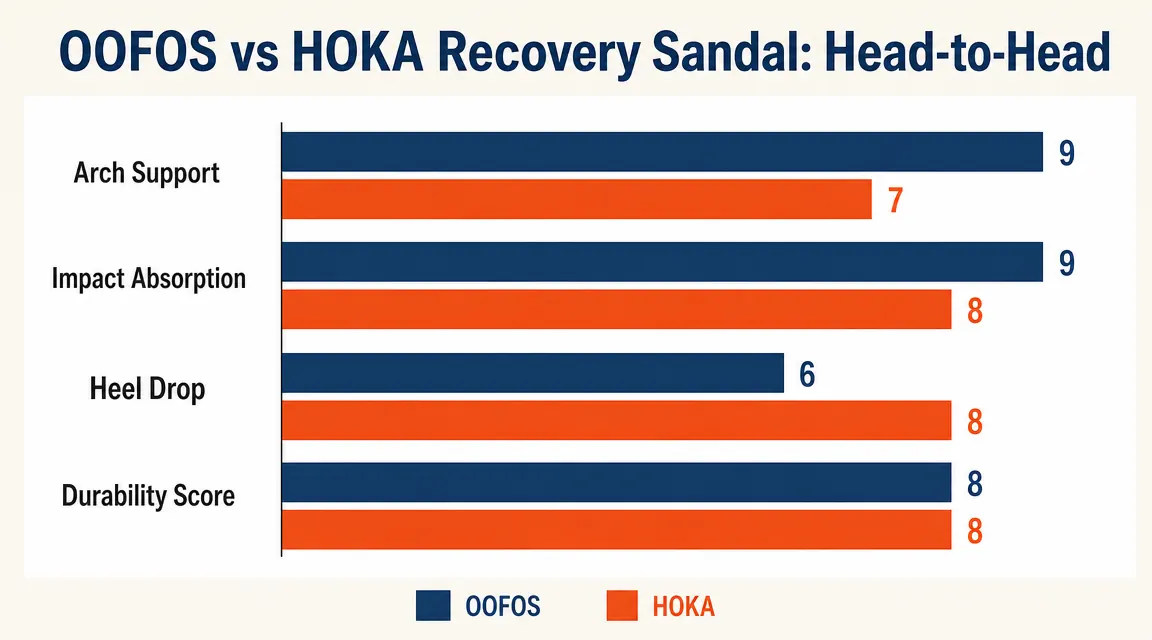
The core advantage OOFOS has is OOfoam, the proprietary material they use for the footbed. Compared to standard EVA foam, OOfoam absorbs significantly more impact force on each step. That matters more than people expect, because the whole point of a recovery sandal is to unload the foot mechanics your training shoes demand. When you step into OOfoam after a long run or a heavy squat session, there is a distinct sense of the foot being held rather than just sitting on foam. The arch contour is aggressive enough to actually engage the plantar fascia and decompress it, which is exactly what gets tight during high-volume training.
Durability is the other place OOFOS pulls ahead. EVA foams compress and lose their rebound character over time, typically within six to nine months of daily use. OOfoam retains its mechanical properties much longer. Most OOFOS wearers report the sandals still feel meaningfully different from a flat shoe at the 12-month mark, which makes the price hold up well on a per-use basis. For anyone in a heavy training block who wants a single pair of recovery sandals to last a full year of daily post-workout use, OOFOS is the safer long-term buy.
Where HOKA Wins
HOKA's ORA Recovery Slide has two real advantages: adjustability and a flatter footbed. The double hook-and-loop strap means you can dial the fit precisely, which matters for people with wide feet or post-run swelling. OOFOS's single thong strap is polarizing: some runners love the minimalist feel, others find the post between the toes uncomfortable, especially after blister-prone long runs. If you are someone who has never liked flip-flop-style sandals, HOKA's strap design is genuinely more comfortable from minute one.
The HOKA also has a higher overall stack height, which some runners prefer for the cushioned feel underfoot. If your recovery priority is just soft landing on hard surfaces (think walking around a hotel, errands on concrete, long airport days), the HOKA performs that role well. Its look is also more polished for daily wear, which is a real consideration for athletes who want one pair of off-training shoes that can pass for casual footwear.
Your feet absorb 3x your body weight per stride. Give them something that actually absorbs it back.
OOFOS OOriginal Recovery Sandals are the top-rated post-workout sandal on Amazon, with 25,673 reviews and a 4.6-star rating. OOfoam technology, high arch contour, and durability that holds up past 12 months of daily use.
Amazon Check Today's Price on Amazon →After my first half marathon, I swapped into OOFOS in the parking lot. By the time I got home, the sharp ache under my left arch was already quieter. That has never happened with a regular slide.
The Foam Technology Difference, Explained Plainly
Most recovery sandals on the market use some form of EVA foam. EVA is a fine material, and it is in plenty of running shoes. The problem is that EVA compresses under load and takes time to rebound. After a long run, your feet are already fatigued and inflamed to some degree. Stepping onto a material that compresses and stays compressed does not do much to unload the foot. OOfoam has a different cell structure that rebounds faster and returns more energy to the foot with each step. Think of it less like standing on a sponge and more like standing on a surface that pushes back, gently, with every shift in weight. That distinction is what plantar fasciitis sufferers and high-mileage runners feel most clearly.
HOKA's EVA midsole is on the softer end of the spectrum, which helps with comfort. But it does not have the same rebound character as OOfoam, and it compresses noticeably faster with heavy daily use. If you wear your recovery sandals only on run days and keep them on for an hour, this gap will not matter much. If you wear them all day on recovery days, it starts to show within a few months.
Plantar Fasciitis: Which Sandal Actually Helps
Plantar fasciitis responds to two things: reducing impact load on the heel and arch, and providing enough support to prevent the fascia from being pulled taut under bodyweight. OOFOS addresses both. The OOfoam absorbs heel strike force, and the built-in arch contour holds the midfoot in a slightly supported position, which takes tension off the plantar fascia band. Multiple sports podiatrists have recommended OOFOS specifically for plantar fasciitis recovery, and the 25,000-plus Amazon reviews include hundreds from runners describing exactly this use case.
HOKA's ORA Slide is more appropriate for general foot fatigue than for plantar-specific issues. Its higher stack gives cushion but the flatter, less-contoured arch means the fascia is not actively supported. For runners where plantar fasciitis is not a current issue and the goal is just comfortable post-run footwear, HOKA works. For anyone managing plantar symptoms or trying to prevent them during high-mileage training blocks, OOFOS is the clearer choice.
Who Should Buy Which
Buy OOFOS if you run more than 20 miles per week, if you have any history of plantar fasciitis or arch tightness, if you want one pair of recovery sandals to last through a full year of daily use, or if you are recovering from a lower-leg injury and need foot support throughout the day. The arch contour takes a day or two to get used to if your feet are accustomed to flat surfaces, but most people adjust within the first week and then notice it immediately when they go back to a flat shoe. Also: size down half a size. OOFOS runs large and most reviewers learn this the hard way.
Buy HOKA ORA if you prefer a strap you can adjust, if thong-style sandals bother you, if you have wide feet that struggle with OOFOS sizing, or if your training load is moderate and you mainly want comfortable post-workout shoes for errands and casual use. The HOKA is a genuinely good sandal, just more of a comfort-first slide than a biomechanically-focused recovery tool. It is also worth considering if you want a sandal that looks more like a lifestyle shoe in social settings.
For most runners and gym-goers reading this comparison, OOFOS is the right call. The foam technology gap is real, the arch support advantage is meaningful for anyone with plantar tendencies, and the durability holds up over a full training season. At the same price point, it does more for foot recovery than the alternative.
If your feet ache hours after training ends, that is not just soreness. It is your body asking for better recovery footwear.
OOFOS OOriginal Recovery Sandals are what most sports podiatrists and running coaches reach for when they recommend post-workout footwear. 4.6 stars across 25,673 Amazon reviews. Remember to size down half a size.
Amazon Check Today's Price on Amazon →